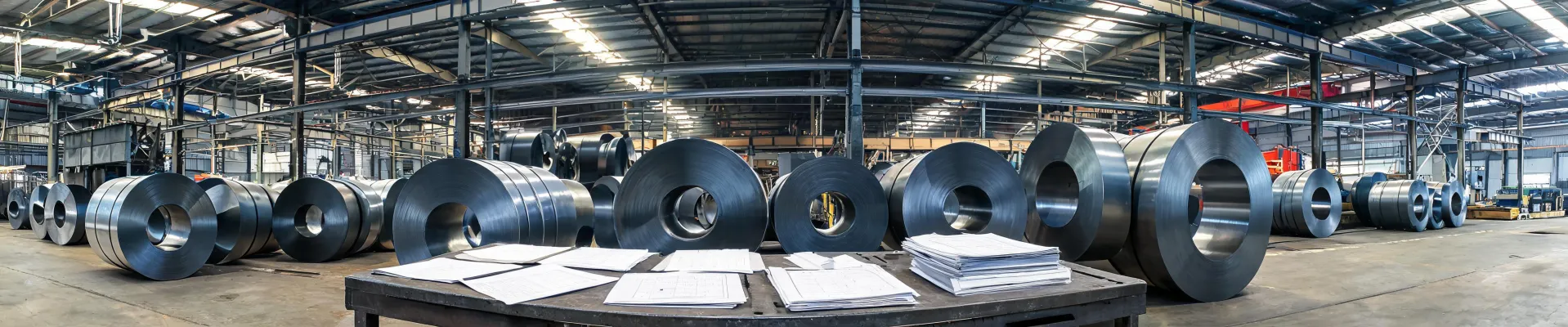
Prevention Beats Cure: A Steel Ordering Checklist That Would Have Saved Me $8,400
-
Most steel ordering mistakes come down to one thing: skipping the check
-
Mistake #1: I approved an 8" steel pipe order without confirming wall thickness
-
Mistake #2: I gave a confident answer to "how much is a 24 ton steel coil worth?"
-
Mistake #3: I trusted a 1050 carbon steel supplier's certificate without checking the heat number
-
"But checking slows us down."
-
The bottom line
-
Mistake #1: I approved an 8" steel pipe order without confirming wall thickness
Most steel ordering mistakes come down to one thing: skipping the check
I'll say it plainly: After nine years of handling steel orders and documenting 14 significant mistakes, the most expensive thing I ever do is assume something is fine. "We don't have time to check" has never saved me money. It's cost me roughly $8,400 in rework, delays, and one very awkward phone call.
So when buyers ask "how much is a 24 ton steel coil worth?" or "can you do 8 diameter steel pipe in this spec?" — I get the urgency. But here's the thing: the answer isn't in the quote. The answer is in the questions you ask before the quote is finalized.
Mistake #1: I approved an 8" steel pipe order without confirming wall thickness
In 2021, we took an order for 8 diameter steel pipe. The drawing said 8" OD, Schedule 40. Fine. We processed it. Then the client called back because they needed Schedule 80 for a high-pressure line (meaning thicker wall, different weight, different price).
That wasn't their fault — my team just didn't ask. We assumed "8 inch steel pipe" meant the same thing to them as it did to us. It didn't.
What we later learned: SCH 40 to SCH 80 for 8" OD means wall thickness jumping from 8.18mm to 12.7mm. That's roughly 50% more weight per meter. On a 200-pipe order, that difference adds up to several thousand dollars.
We ate a $1,900 reorder and a 12-day delay (which, honestly, the customer was right to be upset about). What I learned: a part number without a standard reference is just a guess. Now every pipe order gets checked against ASTM A53 or A106 (i.e., the two most common steel pipe standards), not just a diameter.
Mistake #2: I gave a confident answer to "how much is a 24 ton steel coil worth?"
This one still stings. A client asked about pricing for a 24 ton steel coil in 2023, though I may be misremembering the year. I quoted based on standard A36 carbon steel pricing and current index levels. Looked reasonable. Put another way: reasonable within the boundaries of normal spec variation.
What I missed: they needed a grade with tighter tolerances, and the coil weight included packaging (in other words, net weight was closer to 23.2 ton). We absorbed the mill surcharge plus the difference in net vs. gross weight.
Steel coil pricing usually works off net weight times an index price per metric ton, plus oiling costs, sometimes packaging. I should have asked three things before quoting: grade, net vs. gross weight, and destination (because freight changes delivered price but not mill price).
I don't have hard data on how often this happens industry-wide, but based on our last five years of orders, my sense is that weight and grade mismatches affect a fairly significant chunk of coil transactions — maybe 10-15%. I wish I'd tracked those failed quotes more carefully from the start.
Mistake #3: I trusted a 1050 carbon steel supplier's certificate without checking the heat number
We placed an order with a 1050 carbon steel supplier in Q1 2024. The mill certificate arrived. I filed it. The material arrived. We shipped it out.
Two weeks later: the customer's QC team flagged it. The heat number on the certificate matched the mill test report — but the heat number on the physical coil was different. The supplier had substituted material from another heat that was probably close enough, but not what was documented. (SAE/AISI naming tells you 1050 means roughly 0.50% carbon content, but it doesn't tell you anything about which heat it came from.)
That mistake cost us a full replacement and a customer relationship I'm still rebuilding. The certificate was probably genuine. The substitution was real. I just didn't match the paperwork to the actual product.
Here's the process gap nobody owned: we didn't have a formal inbound material verification process. Things arrived, we checked the label, we shipped. Now we check heat numbers on every incoming coil. It takes about 10 minutes. (Which, honestly, feels excessive every time — until it doesn't.)
"But checking slows us down."
I've heard this from buyers and from my own team. Fair concern. And I'll admit: checking does take time. But not checking takes more.
The 12-point checklist I built after my third major mistake takes roughly 15 minutes per order. In the past 18 months, we've caught 47 potential errors using it. I don't know exactly what each of those would have cost — but if half were "just" $400 fixes, that's nearly $9,400 in avoided rework.
Let me rephrase that: I'm not a natural process person. (I'm the guy who once ordered 500 galvanized washers because I misread "5 boxes" as "5,000 pieces.") But 5 minutes of verification beats 5 days of correction. Most of these issues are preventable with proper specs — and a second set of eyes.
The bottom line
You can probably get a lower price on 8 diameter steel pipe if you skip the spec confirmation. You can probably find a 1050 carbon steel supplier who doesn't ask about heat numbers. And you can probably estimate a 24 ton steel coil's value without double-checking net weight.
Until you can't. And when that happens, the "savings" from skipping the check disappear fast.
That's why, at reliance-steel, we've built our order intake around this idea. Not because I'm some process genius — anyone on our team will correct that impression — but because we genuinely couldn't afford not to. When I brought this up with the reliance steel owner here, his response was: "We need speed." He's right. But being fast and correct is cheaper than being fast and reworking. That's more or less the whole story on our end.

Diego Serrano
Diego Serrano is an independent stainless steel and corrosion-selection analyst covering stainless sheet, plate, coil, tube, bar, and strip. He uses ASTM A240/A240M product requirements alongside alloy chemistry, PREN, tensile properties, surface finish, sensitization risk, pitting exposure, and fabrication route. His comparison guides help designers and buyers choose grades and finishes for pressure, food-processing, architectural, marine, and general industrial service without treating all stainless alloys as interchangeable.